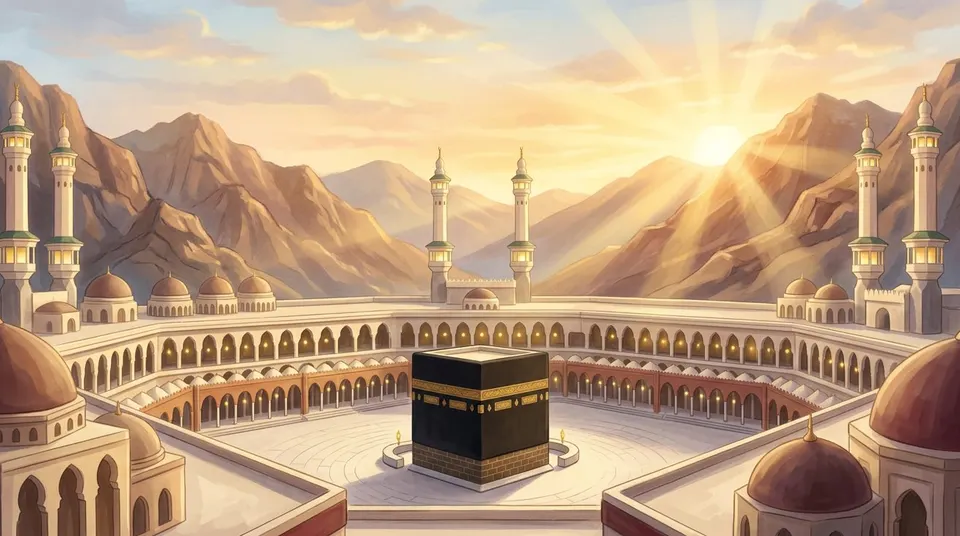
The Seerah
The life of the Prophet Muhammad ﷺ, from the Year of the Elephant to his last days in Madinah, told simply, one moment at a time.
 c. 570 CE
The Year of the Elephant
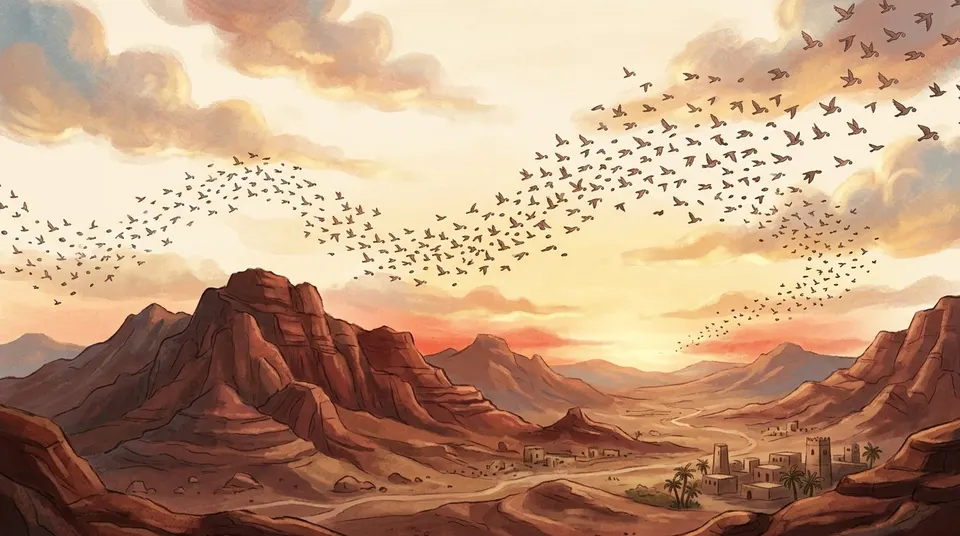
Abrahah marched on Makkah with an army and elephants to destroy the Ka'bah. Allah sent flocks of birds that struck them with stones of baked clay.
In that same year, Muhammad ﷺ was born in Makkah, in the month of Rabi' al-Awwal. His father, 'Abdullah, had died before he was born.
Surah al-Fil 105
 Childhood
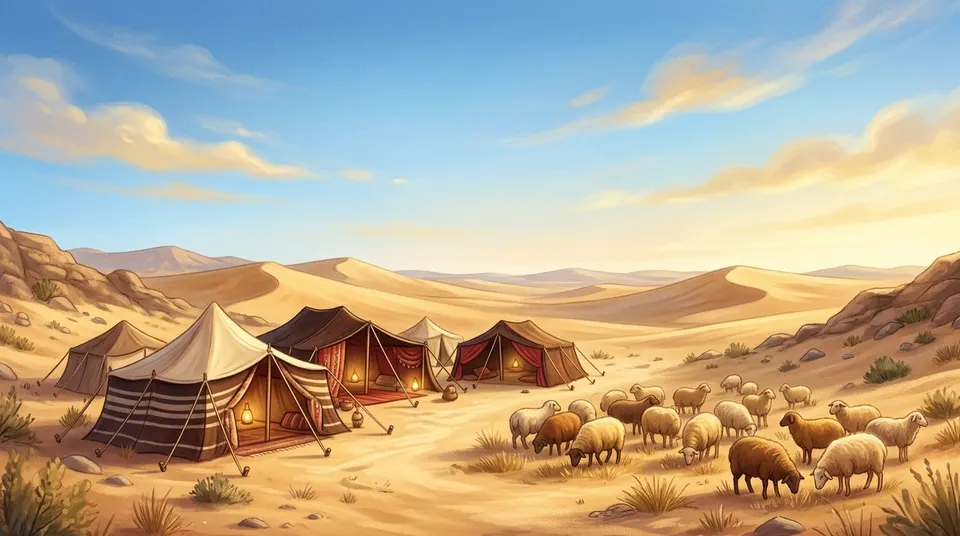
In the desert with Halimah
As was the custom in Makkah, he was sent to the desert to be nursed by Halimah of Banu Sa'd, where he grew up strong and spoke pure Arabic.
Age 6 to 8An orphan, cared for by family
His mother Aminah died when he was six. His grandfather 'Abd al-Muttalib took care of him, and when he died two years later, his uncle Abu Talib raised him.
"Did He not find you an orphan and give you shelter?" Ad-Duha 93:6
 Youth
The trustworthy one
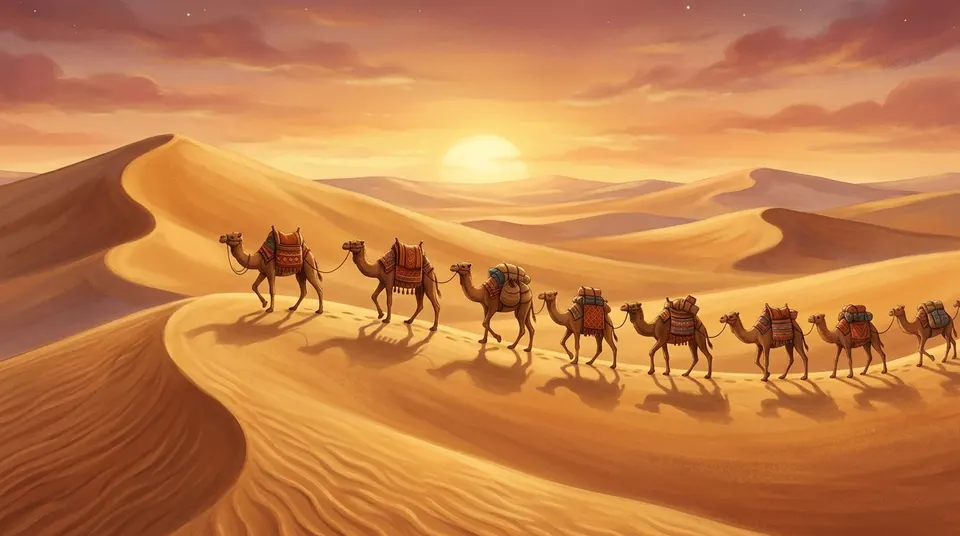
He worked as a shepherd and later as a trader. He was so honest that the people of Makkah called him al-Amin, the trustworthy.
Sahih al-Bukhari 2262
Age 25Marriage to Khadijah
Khadijah, a noble and successful businesswoman, hired him to trade for her. Impressed by his honesty and character, she proposed marriage, and they married. She was his support for the rest of her life.
Age 35The Black Stone
When Quraysh rebuilt the Ka'bah, the tribes argued over who would put the Black Stone back in place. He placed it on a cloth, had a leader from each tribe lift a corner, and set it in place himself. Peace instead of war.
 610 CE · Age 40
The first revelation
He used to spend time alone in the Cave of Hira. There, the angel Jibril came to him and said, "Read!" The first ayat of Surah al-'Alaq were revealed.
He came home shaking, and Khadijah wrapped him up and comforted him: "Allah will never disgrace you. You keep family ties, help the weak and serve your guests."
Sahih al-Bukhari 3
The first 3 yearsThe quiet call
He called people to Islam quietly. The first to believe were Khadijah, Abu Bakr, 'Ali and Zayd ibn Harithah.
Year 3 of prophethoodThe call in public
He climbed Mount Safa and called the people of Makkah to worship Allah alone. Many turned against him. The believers, especially the weak and the poor, were mocked and tortured. Bilal held on, repeating "Ahad, Ahad": One, One.
Sahih al-Bukhari 4770
 Year 5 of prophethood
Migration to Abyssinia
To protect them, he sent a group of believers to Abyssinia, where the Christian king, the Najashi, gave them safety. When Quraysh asked him to send them back, Ja'far recited Surah Maryam, and the king wept.
Surah Maryam
Years 7 to 10The boycott
Quraysh boycotted the Prophet's family, Banu Hashim. For about three years, they were trapped in a valley with little food, sometimes eating leaves.
Year 10 · 619 CEThe Year of Sorrow
In the same year, he lost his uncle Abu Talib, who had protected him, and his beloved wife Khadijah. It became known as the Year of Sorrow.
 Year 10
The journey to Ta'if
He walked to Ta'if to invite its people to Islam. They rejected him and set children on him to throw stones until his feet bled.
The angel of the mountains offered to crush the town. He said no, hoping that their children would one day worship Allah alone.
Sahih al-Bukhari 3231
 Before the Hijrah
Al-Isra' and al-Mi'raj
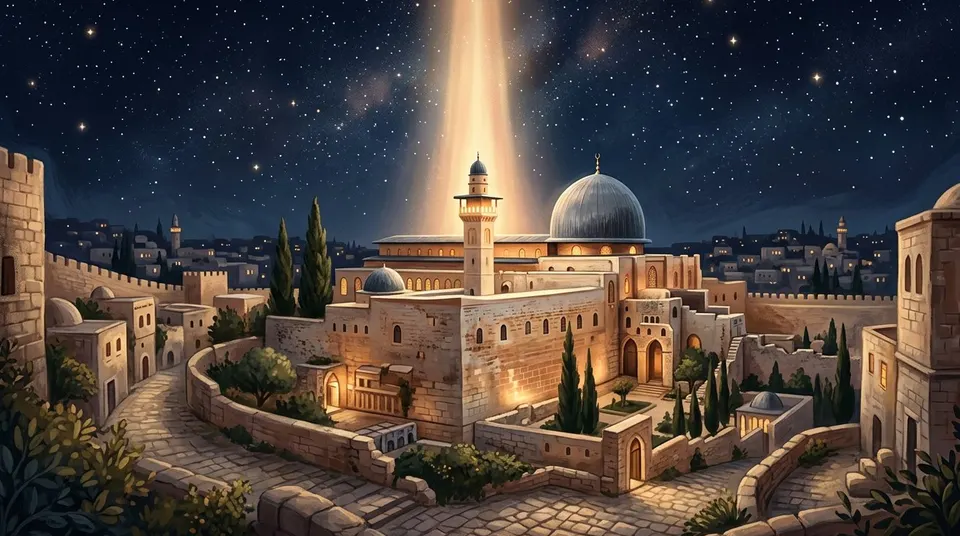
In one night, Allah took him from Makkah to Masjid al-Aqsa in Jerusalem, where he led the prophets in prayer, and then up through the heavens. The five daily prayers were given to him that night, a gift for every believer.
Al-Isra 17:1 · Sahih al-Bukhari 349
621 and 622 CEThe pledges of 'Aqabah
People from Yathrib, a city to the north, met him during the pilgrimage season and accepted Islam. The next year a larger group came and promised to protect him if he came to their city.
 622 CE · 1 AH
The Hijrah
Quraysh plotted to kill him. He left Makkah at night with Abu Bakr, and they hid in the Cave of Thawr for three days. When the searchers were right outside, he said, "Do not grieve. Allah is with us."
They reached Quba, then Yathrib, which became Madinat an-Nabi, the City of the Prophet. The Islamic calendar starts from this year.
At-Tawbah 9:40
 1 AH
A new community
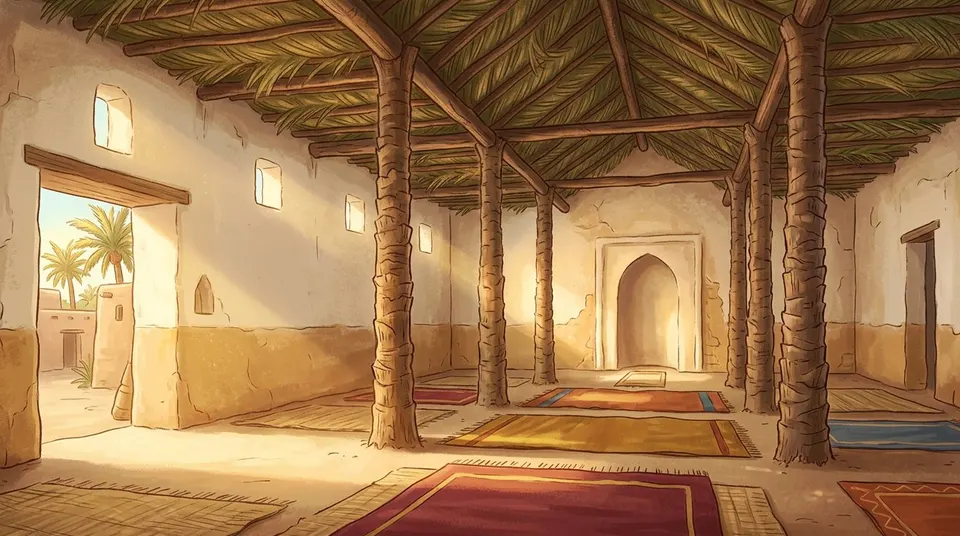
He built the masjid, the Masjid an-Nabawi, with his own hands, and joined each emigrant from Makkah with a brother from the Ansar of Madinah, who shared their homes and wealth with them.
 2 AH
The Qiblah, Ramadan and Badr
The Qiblah changed from Jerusalem to the Ka'bah, and fasting in Ramadan was made an obligation.
On 17 Ramadan, 313 believers met an army of about a thousand at Badr, and Allah gave them victory.
"Allah had already given you victory at Badr while you were few." Al 'Imran 3:123
 3 AH
The Battle of Uhud
At first the Muslims were winning, but the archers left their posts on the hill. The Prophet ﷺ was wounded and his uncle Hamzah was killed. A hard lesson in obedience and patience.
Al 'Imran 3:139
 5 AH
The Battle of the Trench
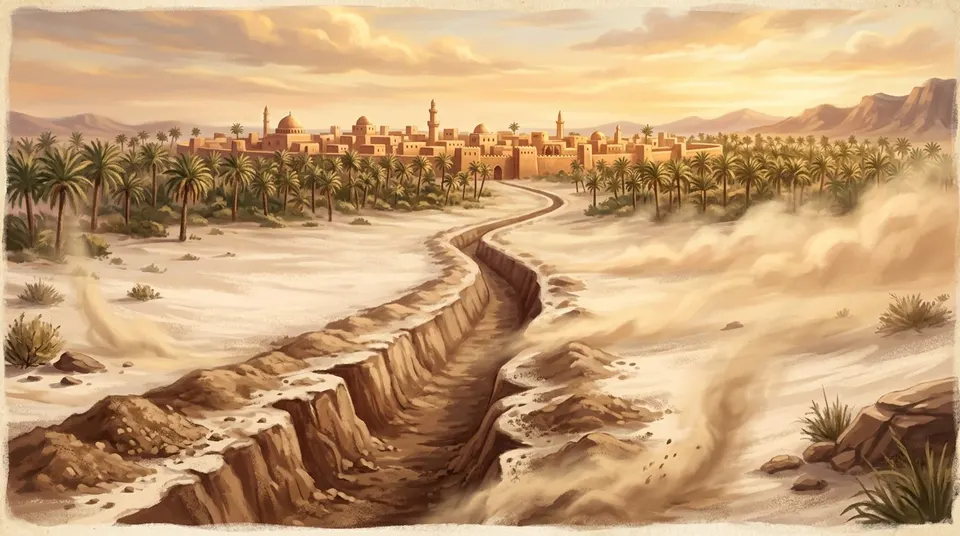
A huge army of tribes came to attack Madinah. On Salman al-Farisi's advice, the Muslims dug a trench around the city. After weeks of siege, Allah sent a fierce wind and the army left.
Al-Ahzab 33:9
 6 AH
The Treaty of Hudaybiyyah
He set out for 'Umrah with his companions but was stopped outside Makkah. He agreed a peace treaty that seemed unfair to many, but Allah called it a clear victory, and Islam spread quickly in the years of peace that followed.
Al-Fath 48:1
7 AHLetters to the kings
He sent letters inviting the rulers of the world to Islam, including the emperors of Rome and Persia, the king of Abyssinia and the ruler of Egypt.
Sahih al-Bukhari 7
8 AHThe Conquest of Makkah
He returned to Makkah with ten thousand believers. He entered humbly, with his head lowered, and the city was taken almost without fighting. He cleared the idols from the Ka'bah, reciting, "Truth has come and falsehood has vanished," and forgave the people who had fought him for years.
Al-Isra 17:81 · Sahih al-Bukhari 4287
9 AHThe Year of Delegations
Tribes from all over Arabia came to Madinah to meet him and accept Islam, and people entered the religion of Allah in crowds.
Surah an-Nasr 110
 10 AH
The Farewell Hajj
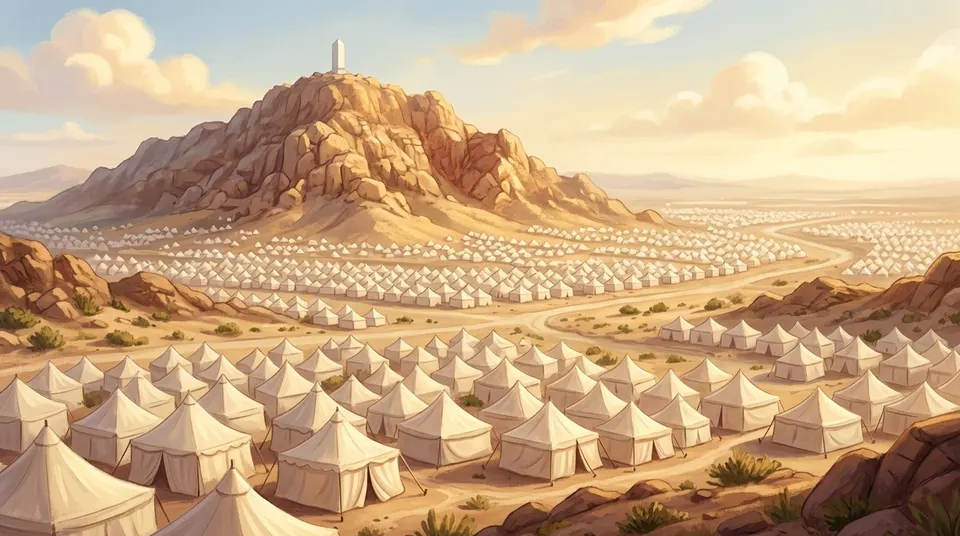
He performed Hajj with over a hundred thousand people. On the Day of Arafah he gave his farewell sermon: the lives, wealth and honour of people are sacred, treat women well, and hold on to the Book of Allah.
That day, the ayah was revealed: "This day I have perfected for you your religion."
Sahih Muslim 1218 · Al-Ma'idah 5:3
 11 AH · 632 CE
His passing
He fell ill and passed away in Madinah, in the room of 'A'ishah, on a Monday in Rabi' al-Awwal, aged 63.
The companions were in shock. Abu Bakr stood and said, "Whoever worshipped Muhammad, Muhammad has died. Whoever worships Allah, Allah is alive and never dies," and recited the ayah below.
Sahih al-Bukhari 3668 · Al 'Imran 3:144