Stories of the Prophets
The 25 prophets named in the Qur'an, from Adam to Muhammad ﷺ. Each story is told in full from the Qur'an and authentic hadith, with the lesson it leaves for our hearts.

Why their stories?
Allah tells us these stories so our hearts can find strength in them. They were people who were tested, who were hurt, who waited and who kept trusting Allah.
"And each story We relate to you from the news of the messengers is that by which We make firm your heart."
Hud 11:120
1Adam
The first human and the first prophet
Before any human existed, Allah told the angels, "I am going to place a khalifah, a successor, on the earth." The angels asked, "Will You place on it someone who will cause corruption and shed blood, while we glorify and praise You?" Allah said, "I know what you do not know."
Allah created Adam from clay taken from the earth, shaped him, and breathed into him the soul He created for him. Then Allah taught Adam the names of all things, and showed them to the angels. "Tell Me their names, if you are truthful." The angels said, "Glory be to You. We have no knowledge except what You have taught us." Then Adam told them the names, and the angels saw the wisdom in Allah's choice.
Allah commanded the angels to bow down to Adam, and they all bowed, except Iblis. He was from the jinn, and he refused out of arrogance: "I am better than him. You created me from fire and created him from clay." Allah expelled him in disgrace. Iblis asked to be given time until the Day of Resurrection, and swore that he would come at the children of Adam from in front of them and behind them, from their right and their left, and lead them astray. Allah said that he would have no power over Allah's sincere servants, and that Hell would be filled with him and those who follow him.
Adam and his wife Hawwa lived in Paradise. "Eat freely from it wherever you wish," Allah told them, "but do not go near this tree, or you will be among the wrongdoers." Allah warned Adam that Iblis was an enemy to him and his wife, and that in Paradise he would never be hungry, thirsty, unclothed or hot from the sun.
Shaytan whispered to them. "Shall I show you the tree of eternity and a kingdom that never ends?" He swore to them by Allah that he was a sincere adviser. He deceived them, and they ate from the tree. At once their coverings fell away, and they began to cover themselves with leaves from the garden.
Allah called to them, "Did I not forbid you from that tree, and tell you that Shaytan is your clear enemy?" Unlike Iblis, they did not argue or blame anyone. Adam received words of repentance from his Lord, and they said, "Our Lord, we have wronged ourselves. If You do not forgive us and have mercy on us, we will surely be among the losers." Allah accepted their repentance, for He is the Accepter of repentance, the Most Merciful.
Then Allah sent them down to the earth, where they and their children would live for a time, and die, and be brought out again. Allah promised, "When guidance comes to you from Me, whoever follows My guidance will have no fear and will not grieve." Adam became the first prophet, and he taught his children to worship Allah alone.
Two of Adam's sons each offered a sacrifice. Allah accepted it from one and not from the other. Out of jealousy, the one whose offering was rejected killed his brother, then did not know what to do with the body, until Allah sent a crow scratching the ground to show him how to bury it, and he was filled with regret. Allah said that because of this, whoever kills one innocent soul, it is as if they have killed all of humanity, and whoever saves one, it is as if they have saved all of humanity.
Everyone slips. What matters is turning back to Allah straight away. He loves to forgive.
"Our Lord, we have wronged ourselves. If You do not forgive us and have mercy on us, we will surely be among the losers."
Al-A'raf 7:23Read more in the Qur'an: Al-Baqarah 2:30-37 · Al-A'raf 7:11-25 · Taha 20:115-123
↑ Choose another prophet

Idris is one of the prophets named in the Qur'an, though very little of his life is described. Allah says: "And mention in the Book, Idris. Indeed, he was a man of truth and a prophet. And We raised him to a high station."
Allah also names him among the patient, together with Isma'il and Dhul-Kifl, and says that He admitted them into His mercy, for they were among the righteous.
In the hadith of the Night Journey, the Prophet Muhammad ﷺ met Idris in the fourth heaven, and Idris welcomed him, saying, "Welcome to the righteous brother and the righteous prophet" (Sahih al-Bukhari 3207).
Many other stories are told about Idris, but they do not come from the Qur'an or authentic hadith, so we leave them, and hold on to what Allah tells us: he was truthful, he was patient, and Allah raised him high.
You don't need to be famous to be honoured by Allah. Truthfulness and patience raise you.
"And mention in the Book, Idris. Indeed, he was a man of truth and a prophet. And We raised him to a high station."
Maryam 19:56-57Read more in the Qur'an: Maryam 19:56-57 · Al-Anbiya 21:85-86
↑ Choose another prophet
3Nuh
Noah, who built the ark
Over many generations after Adam, people began to honour righteous men who had died by making statues of them. In time, the statues themselves were worshipped. Their names were Wadd, Suwa', Yaghuth, Ya'uq and Nasr. Ibn 'Abbas explained that they were the names of righteous people, whose images were later worshipped (Sahih al-Bukhari 4920).
Allah sent Nuh to his people. "O my people, worship Allah. You have no god other than Him. I fear for you the punishment of a tremendous Day." He called them by night and by day, publicly and privately. "Ask forgiveness of your Lord. He is ever forgiving. He will send rain upon you in abundance, give you wealth and children, and give you gardens and rivers."
But the more he called, the more they ran away. They put their fingers in their ears, covered themselves with their garments, persisted and grew more arrogant. The leaders mocked him: "We see you only as a man like us, and we see that only the lowest of us follow you." They demanded that he drive away the poor believers, and he refused. They told him, "If you do not stop, O Nuh, you will be stoned." Nuh stayed among them for nine hundred and fifty years, and only a few believed.
At last Allah revealed to him that no more of his people would believe, except those who already had. Nuh prayed, "My Lord, help me, for they have denied me." Allah told him, "Build the ark under Our eyes and Our inspiration, and do not plead with Me for those who have done wrong. They will be drowned." Every time the chiefs passed by him building, they ridiculed him. He said, "If you ridicule us, we will ridicule you just as you ridicule, and you will come to know."
When Allah's command came and water gushed up from the earth, Allah told Nuh to load onto the ark a pair of every kind, his family, except those against whom the word had already gone forth, and those who believed. "Embark," Nuh said, "in the name of Allah it sails and anchors."
The ark sailed through waves like mountains. Nuh called to his son, who had kept himself apart, "O my son, come aboard with us, and do not be with the disbelievers." His son said, "I will take refuge on a mountain that will protect me from the water." Nuh said, "There is no protector today from Allah's command, except for whoever He has mercy on." A wave came between them, and his son was among the drowned. Nuh called to his Lord, "My son is of my family, and Your promise is true." Allah told him that his son was not of his family in faith, for his deeds were not righteous, and Nuh sought Allah's forgiveness for asking.
Then it was said, "O earth, swallow your water, and O sky, withhold your rain." The water subsided, the matter was ended, and the ark came to rest on Mount Judi. It was said, "O Nuh, disembark in peace from Us, and with blessings upon you and upon nations from those with you."
Allah made the ark a sign for all who came after. Nuh is one of the five greatest messengers, the Ulul-'Azm, and Allah sends peace upon him in the Qur'an: "Peace be upon Nuh among the worlds."
Keep calling people to good, however long it takes. Guidance is in Allah's hands, not ours.
"Ask forgiveness of your Lord. Indeed, He is ever a Perpetual Forgiver. He will send rain from the sky upon you in showers."
Nuh 71:10-11Read more in the Qur'an: Hud 11:25-49 · Nuh 71 · Al-'Ankabut 29:14
↑ Choose another prophet
4Hud
Sent to the people of 'Aad
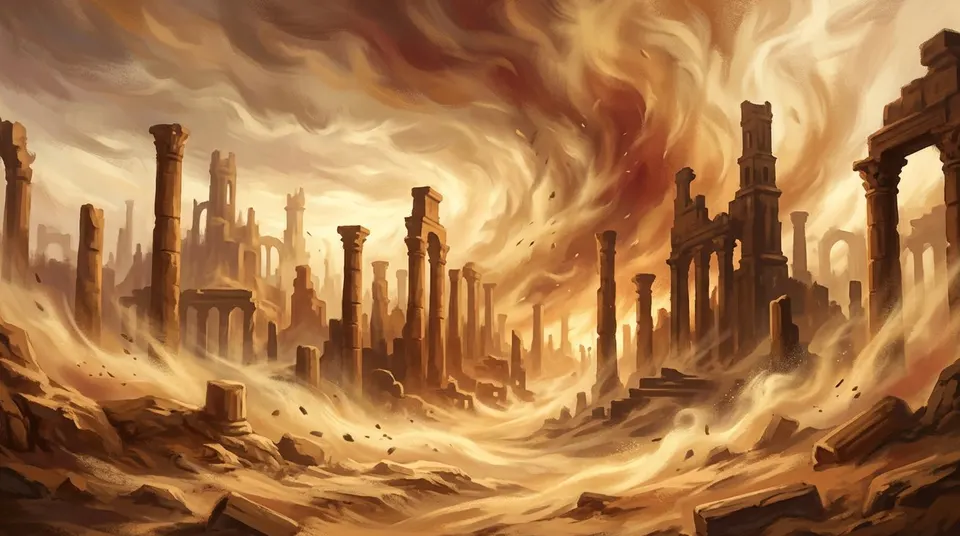
After Nuh, the people of 'Aad lived in a land of sand dunes called al-Ahqaf. Allah gave them great strength and tall bodies, flocks, children, gardens and springs. They built tall structures on every high place, and fortresses as if they would live forever. But they grew arrogant and said, "Who is greater than us in strength?" They did not see that Allah, who created them, was greater in strength than them.
Allah sent them their brother Hud. "O my people, worship Allah. You have no god other than Him. Will you not fear Him? I ask you for no reward. My reward is only from the One who created me. Ask forgiveness of your Lord and turn back to Him. He will send the sky upon you with rain and add strength to your strength."
They replied, "O Hud, you have not brought us any clear proof. We will not leave our gods because of what you say. We only say that one of our gods has struck you with madness." Hud answered, "I call Allah to witness, and you witness too, that I am free of whatever you associate with Him. So plot against me all together, and give me no time. I have put my trust in Allah, my Lord and your Lord. There is no creature except that He holds it by its forelock."
They persisted. Then they saw a cloud coming towards their valleys, and they rejoiced: "This is a cloud bringing us rain!" Hud said, "No, it is what you were asking to hurry. A wind carrying a painful punishment."
It was a furious, freezing wind that Allah set upon them for seven nights and eight days without stopping. The people were left lying like the hollow trunks of fallen palm trees. Nothing remained of them except their empty homes.
Allah saved Hud and those who believed with him, by His mercy. The Prophet ﷺ said, "I was helped by the east wind, and 'Aad were destroyed by the west wind" (Sahih al-Bukhari 1035). Whenever a strong wind blew, he would make dua, asking Allah for its good and seeking refuge from its harm.
Strength, wealth and success are gifts from Allah. They are a reason to be grateful, not proud.
"I have relied upon Allah, my Lord and your Lord. There is no creature but that He holds its forelock."
Hud 11:56Read more in the Qur'an: Hud 11:50-60 · Al-Ahqaf 46:21-25 · Al-Haqqah 69:6-8
↑ Choose another prophet
5Salih
Sent to the people of Thamud
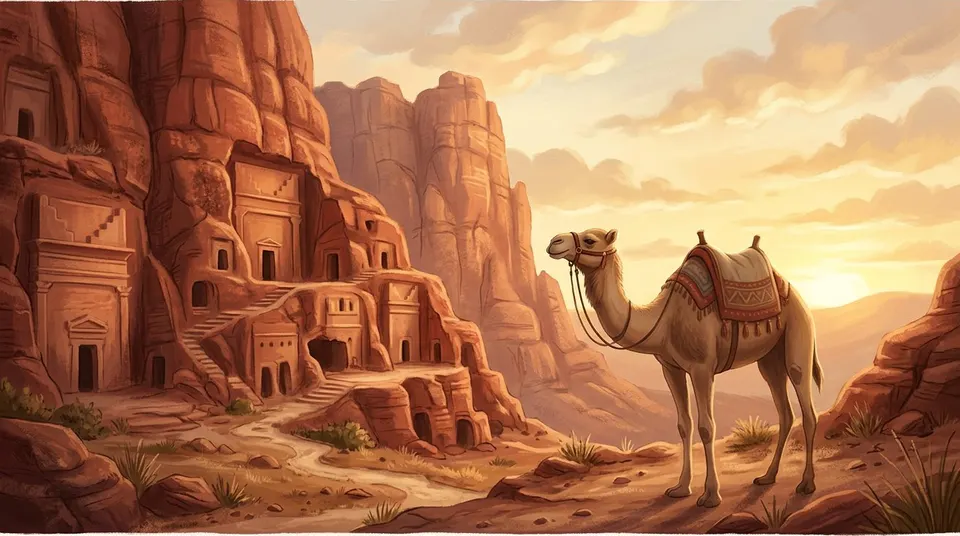
After 'Aad came the people of Thamud. They lived in al-Hijr, in the north of Arabia, among gardens, springs, crops and palm trees. They carved homes out of the mountains with great skill, and built palaces on the plains.
Allah sent them their brother Salih. "O my people, worship Allah. You have no god other than Him. He produced you from the earth and settled you in it, so ask His forgiveness and turn back to Him. My Lord is near and responsive." They said, "O Salih, you were someone we had high hopes for before this. Do you forbid us from worshipping what our fathers worshipped?" They called him bewitched, and demanded a sign.
Allah sent them a she-camel as a clear sign. "This is the she-camel of Allah, a sign for you," Salih said. "Leave her to eat on Allah's earth, and do not touch her with harm, or a near punishment will seize you." The water was to be shared: she had her day to drink, and the people had theirs.
In the city there were nine men who spread corruption and did no good. The most wretched of them came forward and hamstrung the she-camel, and the people approved. Then they arrogantly said, "O Salih, bring us what you promised us, if you are a messenger." The nine men even swore to each other to attack Salih and his family at night, then deny that they had seen anything. But Allah planned too, while they did not know.
Salih told them, "Enjoy yourselves in your homes for three days. That is a promise that will not be broken." Then the mighty blast and the earthquake seized them, and they lay dead, face down in their homes, as if they had never lived there. Allah saved Salih and the believers with him.
Salih turned away from them and said, "O my people, I conveyed to you the message of my Lord and advised you, but you do not like advisers." When the Prophet ﷺ passed by the ruins of Thamud on the way to Tabuk, he told his companions to enter them only weeping, and not to use their water (Sahih al-Bukhari 433, 3379).
When Allah shows you a sign, don't harden your heart to it.
"This is the she-camel of Allah, a sign for you. So let her eat on Allah's earth and do not touch her with harm."
Hud 11:64Read more in the Qur'an: Hud 11:61-68 · Ash-Shu'ara 26:141-159 · Ash-Shams 91:11-15
↑ Choose another prophet

6Ibrahim
The friend of Allah
Ibrahim grew up among a people who worshipped statues, and his own father, Azar, made them. From his youth Allah gave him sound judgement. He asked his father, "Do you take idols as gods? I see you and your people in clear error." He asked his people, "What are these statues you devote yourselves to?" They said, "We found our fathers worshipping them."
Ibrahim showed his people the truth through the sky. When night covered him, he saw a star and said, "This is my lord." When it set, he said, "I do not love things that set." When he saw the moon rising, he said, "This is my lord," and when it set, he said, "If my Lord does not guide me, I will be among the people gone astray." When he saw the sun rising, he said, "This is my lord, this is greater," and when it set, he said, "O my people, I am free of what you associate with Allah. I have turned my face to the One who created the heavens and the earth."
He spoke gently to his father: "O my father, why do you worship what cannot hear, see or benefit you at all? Knowledge has come to me that has not come to you, so follow me and I will guide you to a straight path." His father threatened to stone him and told him to leave. Ibrahim said, "Peace be upon you. I will ask my Lord to forgive you. He has always been kind to me."
One day, when the people went out of the city to a festival, Ibrahim went to their temple. He said to the idols, "Will you not eat? Why do you not speak?" Then he broke them all into pieces, except the biggest one. When the people returned and asked who had done this, they brought Ibrahim before everyone. "Was it you?" "Rather, the biggest of them did it. Ask them, if they can speak." They looked at one another, then hung their heads: "You know these do not speak." Ibrahim said, "Then do you worship, besides Allah, what can neither benefit you nor harm you?"
Ibrahim also debated the king of his land, who claimed, "I give life and cause death." Ibrahim said, "Allah brings the sun up from the east. So bring it up from the west." And the disbeliever was left speechless.
The people said, "Burn him and support your gods." They built a huge fire and threw Ibrahim into it. As he was thrown, he said, "Hasbunallahu wa ni'mal wakeel: Allah is sufficient for us, and He is the best Disposer of affairs" (Sahih al-Bukhari 4563). Allah said, "O fire, be coolness and safety for Ibrahim." The fire did not harm him, and his people's plot failed.
Ibrahim left his homeland with his wife Sarah and his nephew Lut, saying, "I am going to my Lord. He will guide me." Allah blessed him with two sons: Isma'il, from Hajar, and Ishaq, from Sarah. He was tested greatly, including with the command to sacrifice his son, and he fulfilled every test. Allah said, "I will make you a leader for the people," took him as His close friend, Khalil, and told the Prophet Muhammad ﷺ to follow the way of Ibrahim, upright in faith.
With his son Isma'il, Ibrahim raised the foundations of the Ka'bah, praying, "Our Lord, accept this from us." He called people to Hajj, and Allah promised that they would come on foot and on every lean camel from every distant pass. Every Muslim mentions Ibrahim in every prayer, in the salawat at the end of the tashahhud.
Trust Allah completely, even when you can't see how things will work out.
"Our Lord, accept this from us. Indeed, You are the All-Hearing, the All-Knowing."
Al-Baqarah 2:127Read more in the Qur'an: Al-An'am 6:74-83 · Al-Anbiya 21:51-70 · As-Saffat 37:99-111 · Ibrahim 14:35-41
↑ Choose another prophet

Lut was the nephew of Ibrahim and believed in him. He left their homeland with Ibrahim and was sent as a prophet to the people of Sodom and the nearby towns.
His people committed acts of indecency that no people before them had ever committed. Men went to men with desire instead of women. They also robbed travellers on the road and did wrong openly in their gatherings.
Lut told them, "Will you not fear Allah? I am a trustworthy messenger to you. I ask you for no reward. Will you leave the wives your Lord created for you? You are a people who transgress." Their only answer was, "Expel the family of Lut from your town. They are people who keep themselves pure!" They said, "Bring us Allah's punishment, if you are truthful."
Lut prayed, "My Lord, help me against the people who spread corruption." The angels who had come to Ibrahim with the good news of Ishaq told him they were going on to destroy the people of Lut. Ibrahim pleaded for them, saying, "Lut is there." The angels said, "We know best who is there. We will save him and his family, except his wife."
The angels came to Lut in the form of guests. He was distressed for them, knowing what his people would try to do. His people came rushing to his house. Lut pleaded with them, "Fear Allah and do not disgrace me with my guests. Is there not a single sensible man among you?" They would not listen.
The angels said, "O Lut, we are messengers from your Lord. They will never reach you. Leave with your family during the night, and let none of you look back, except your wife. What strikes them will strike her. Their appointed time is the morning. Is the morning not near?"
When the command came, Allah turned the towns upside down and rained down on them stones of baked clay, layer upon layer. Allah saved Lut and his believing family. His wife, who had not believed, was left behind with the people. Allah left the place as a clear sign for those who reflect.
Stand for what is right, even when you are alone.
"My Lord, save me and my family from what they do."
Ash-Shu'ara 26:169Read more in the Qur'an: Hud 11:77-83 · Al-Hijr 15:58-77 · Ash-Shu'ara 26:160-175
↑ Choose another prophet

8Isma'il
The son of Ibrahim and Hajar
Isma'il was the son of Ibrahim and Hajar. When he was still a baby, Ibrahim brought them to the barren valley where Makkah now stands, near the place of the Ka'bah, and left them with a bag of dates and a water skin. Hajar asked, "Has Allah commanded you to do this?" He said yes. She said, "Then He will not let us be lost" (Sahih al-Bukhari 3364). Ibrahim prayed, "Our Lord, I have settled some of my descendants in an uncultivated valley near Your Sacred House... so make the hearts of people incline towards them, and provide them with fruits."
When the water ran out, Hajar ran seven times between the hills of Safa and Marwah looking for help. Then the angel appeared, and water gushed from the ground: the spring of Zamzam. The tribe of Jurhum saw birds circling over the water and asked Hajar's permission to settle there. Isma'il grew up among them, learned Arabic from them, and later married from them.
When Isma'il was old enough to work alongside his father, Ibrahim saw in a dream that he was sacrificing him. The dreams of prophets are revelation. "O my son, I have seen in a dream that I am sacrificing you, so what do you think?" Isma'il said, "O my father, do as you are commanded. You will find me, in sha Allah, among the patient."
When they had both submitted, and Ibrahim had laid him down on his forehead, Allah called out, "O Ibrahim, you have fulfilled the vision." This was a clear test. Allah ransomed Isma'il with a great sacrifice, and this is remembered every Eid al-Adha.
Years later, Ibrahim and Isma'il built the Ka'bah together. Isma'il brought the stones, and Ibrahim built. As they raised its foundations, they prayed, "Our Lord, accept this from us. You are the All-Hearing, the All-Knowing. Our Lord, make us Muslims to You... and raise among them a messenger from among themselves." That prayer was answered with the Prophet Muhammad ﷺ, a descendant of Isma'il.
Allah praised Isma'il: "He was true to his promise, and he was a messenger and a prophet. He used to command his family to pray and give zakah, and he was pleasing to his Lord."
Patience and keeping your word are signs of a strong heart.
"And mention in the Book, Isma'il. Indeed, he was true to his promise, and he was a messenger and a prophet."
Maryam 19:54Read more in the Qur'an: As-Saffat 37:101-107 · Al-Baqarah 2:127-129 · Maryam 19:54-55
↑ Choose another prophet

9Ishaq
The son of Ibrahim and Sarah
Ishaq was the son of Ibrahim and Sarah, born when they were both very old. Angels came to Ibrahim's house in the form of guests. Ibrahim, known for his generosity, quickly brought them a roasted calf, but they did not eat, and he felt afraid of them.
"Do not be afraid," they said. "We have been sent to the people of Lut." His wife Sarah was standing there, and she laughed. Then they gave her the good news of Ishaq, and after Ishaq, Ya'qub.
Sarah struck her face in amazement. "Woe is me! Shall I give birth when I am an old woman and this husband of mine is an old man? This is truly amazing!" The angels said, "Are you amazed at the decree of Allah? May the mercy of Allah and His blessings be upon you, people of the house. He is Praiseworthy, Glorious."
Ibrahim thanked Allah: "Praise be to Allah, who has granted me in old age Isma'il and Ishaq. My Lord hears every prayer."
Allah made Ishaq a prophet among the righteous, and blessed him and his descendants. Many prophets came from his line through his son Ya'qub, including Yusuf, Musa, Dawud, Sulayman and 'Isa. Allah describes Ibrahim, Ishaq and Ya'qub as "men of strength and vision", chosen for the remembrance of the Home of the Hereafter.
Nothing is too hard for Allah. Keep making dua, even for things that seem impossible.
"May the mercy of Allah and His blessings be upon you, people of the house."
Hud 11:73Read more in the Qur'an: Hud 11:69-73 · Adh-Dhariyat 51:24-30 · As-Saffat 37:112-113
↑ Choose another prophet

10Ya'qub
The father of Yusuf
Ya'qub, also called Isra'il, was the son of Ishaq and the grandson of Ibrahim. His descendants are the Children of Isra'il. He was a prophet, and he had twelve sons.
Ya'qub loved his son Yusuf deeply. When Yusuf told him of his dream of eleven stars, the sun and the moon bowing to him, Ya'qub warned him not to tell his brothers, knowing they might plot against him. Later, the brothers asked to take Yusuf out with them. Ya'qub said, "It saddens me that you take him, and I fear a wolf may eat him while you are not paying attention."
They returned in the evening, weeping, with Yusuf's shirt stained with false blood. "A wolf ate him." Ya'qub said, "Rather, your souls have tempted you to something. So patience is most fitting. Allah is the one whose help is sought against what you describe." Ya'qub said, "Sabrun jameel": beautiful patience, without complaint to people.
Years later, during a famine, his sons travelled to Egypt for food, and the minister there, who was Yusuf, though they did not know it, told them to bring their youngest brother, Binyamin. Ya'qub reluctantly agreed, after they gave him a solemn promise. When they came back without Binyamin too, Ya'qub turned away from them and said, "Oh, my sorrow over Yusuf!" His eyes became white from grief, though he held it in.
His sons said, "By Allah, you will not stop remembering Yusuf until you become ill or die." He answered, "I only complain of my suffering and my grief to Allah, and I know from Allah what you do not know. O my sons, go and search for Yusuf and his brother, and do not despair of the mercy of Allah. Only disbelieving people despair of Allah's mercy."
When the caravan set out from Egypt carrying Yusuf's shirt, Ya'qub said, "I sense the scent of Yusuf." When the shirt was placed on his face, his sight returned. "Did I not tell you that I know from Allah what you do not know?" His sons asked him to seek forgiveness for them, and he said, "I will ask my Lord to forgive you. He is the Forgiving, the Merciful."
When death came to Ya'qub, he gathered his sons and asked, "What will you worship after me?" They said, "We will worship your God and the God of your fathers, Ibrahim, Isma'il and Ishaq, One God, and to Him we submit."
You can be heartbroken and still trust Allah. Take your sadness to Him.
"I only complain of my suffering and my grief to Allah."
Yusuf 12:86Read more in the Qur'an: Yusuf 12 · Al-Baqarah 2:132-133
↑ Choose another prophet
11Yusuf
From the well to the palace
Allah calls the story of Yusuf "the best of stories". As a boy, Yusuf saw in a dream eleven stars, the sun and the moon bowing to him. His father Ya'qub told him not to tell his brothers, and that Allah would choose him, teach him the interpretation of events and complete His favour on him.
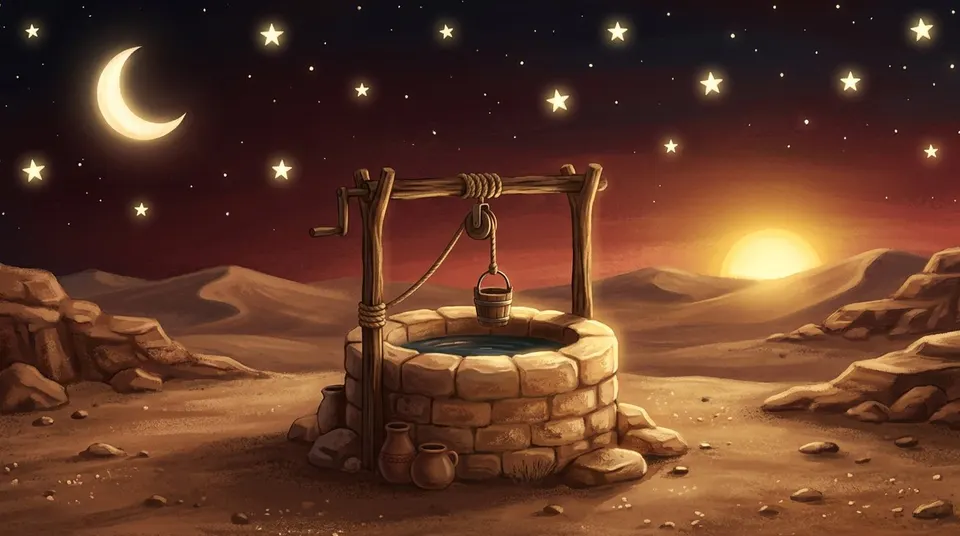
His brothers were jealous of their father's love for Yusuf and his brother Binyamin. One said, "Kill Yusuf, or cast him out to some land." Another said, "Do not kill him, but throw him into the bottom of the well, and some travellers will pick him up." They persuaded their father to let him come out with them, threw him into the well, and came home weeping with his shirt stained with false blood. Allah inspired Yusuf in the well: "You will one day inform them of this deed of theirs, while they do not realise it."
Travellers came, and their water-drawer lowered his bucket. "Good news! Here is a boy!" They hid him as merchandise and sold him in Egypt for a few coins. The man who bought him, a minister called al-'Aziz, told his wife, "Make his stay comfortable. Perhaps he will benefit us, or we will adopt him as a son."
When Yusuf reached maturity, Allah gave him judgement and knowledge. The minister's wife tried to seduce him, closing the doors. He said, "I seek refuge in Allah. He is my master who has treated me well." He ran to the door, and she tore his shirt from behind. At the door they met her husband. A witness from her family said that if the shirt was torn from the front, she was truthful, and if from behind, he was. The shirt was torn from behind.
The women of the city gossiped about her. She invited them, gave each a knife, and called Yusuf out. They were so struck by his beauty that they cut their hands, saying, "This is no human. This is a noble angel." She said, "This is the one you blamed me for. If he will not do what I order, he will be imprisoned." Yusuf said, "My Lord, prison is dearer to me than what they invite me to." Although his innocence was clear, he was put in prison.
In prison, two young men told him their dreams. Before explaining them, Yusuf called them to worship Allah alone. One would serve wine to the king again, and the other would be executed. Yusuf asked the one who would be freed to mention him to the king, but Shaytan made him forget, and Yusuf stayed in prison for several more years.
The king saw seven fat cows eaten by seven lean ones, and seven green ears of grain and seven dry. No one could explain it, until the servant remembered Yusuf. Yusuf explained: seven years of good harvests, then seven years of famine, then a year of relief. Store the grain in its ears. When the king summoned him, Yusuf refused to leave until his innocence was made clear. The women admitted it, and the minister's wife confessed: "I sought to seduce him, and he is truthful." The king said, "Bring him to me," and Yusuf asked to be put in charge of the storehouses of the land.
In the famine, his brothers came to buy grain. Yusuf recognised them, but they did not recognise him. He asked them to bring their youngest brother next time. When they returned with Binyamin, Yusuf told Binyamin who he was, then placed the king's cup in his bag, so that he could keep him with him by the king's law. The brothers returned to their father without Binyamin, and Ya'qub's grief deepened.
On their third visit, the brothers pleaded for charity. Yusuf asked, "Do you know what you did to Yusuf and his brother?" "Are you Yusuf?" "I am Yusuf, and this is my brother. Allah has been gracious to us." They said, "By Allah, Allah has preferred you over us, and we were sinners." Yusuf said, "No blame upon you today. Allah will forgive you, and He is the most merciful of the merciful."
He sent his shirt to his father, and Ya'qub's sight returned. The whole family came to Egypt. Yusuf raised his parents on the throne, and they all bowed down to him in greeting. "O my father, this is the interpretation of my dream from before. My Lord has made it real." Yusuf prayed, "My Lord, You have given me authority and taught me interpretation. Cause me to die a Muslim and join me with the righteous."
After every hardship comes ease. And forgiving those who hurt you is the greater win.
"No blame will there be upon you today. Allah will forgive you, and He is the most merciful of the merciful."
Yusuf 12:92Read more in the Qur'an: Surah Yusuf 12
↑ Choose another prophet

Ayyub was a prophet whom Allah blessed with wealth, land, livestock, children and good health, and he was grateful for all of it.
Then Allah tested him. He lost his wealth and his children, and he was afflicted with severe illness in his body, which lasted a long time. Through it all, he remained patient and kept remembering Allah. He did not complain about his Lord to people.
His wife stayed with him and cared for him through the long years. Allah also gave him a gentle way to keep an oath he had made: "Take in your hand a bunch of grass and strike with it, and do not break your oath."
Ayyub called to his Lord with great courtesy: "Indeed, hardship has touched me, and You are the most merciful of the merciful." He also said, "Shaytan has touched me with hardship and pain."
Allah answered him: "Strike the ground with your foot. This is a cool spring for washing and for drinking." Ayyub struck the ground, a spring appeared, and when he washed and drank, Allah removed his illness.
Allah restored his family to him and gave him the like of them besides, as a mercy from Him and a reminder for people of understanding. The Prophet ﷺ said that once, while Ayyub was bathing, golden locusts fell on him and he began gathering them. His Lord called, "Have I not made you rich enough?" He said, "Yes, by Your might, but I can never have enough of Your blessings" (Sahih al-Bukhari 279).
Allah praised him: "We found him patient. What an excellent servant. He always turned back to Allah."
Patience isn't pretending you're fine. It's taking your pain to Allah and trusting Him with it.
"Indeed, hardship has touched me, and You are the most merciful of the merciful."
Al-Anbiya 21:83Read more in the Qur'an: Al-Anbiya 21:83-84 · Sad 38:41-44
↑ Choose another prophet
13Shu'ayb
Sent to the people of Madyan
Shu'ayb was sent to the people of Madyan, who also lived among thickets, and are called the Companions of the Wood.
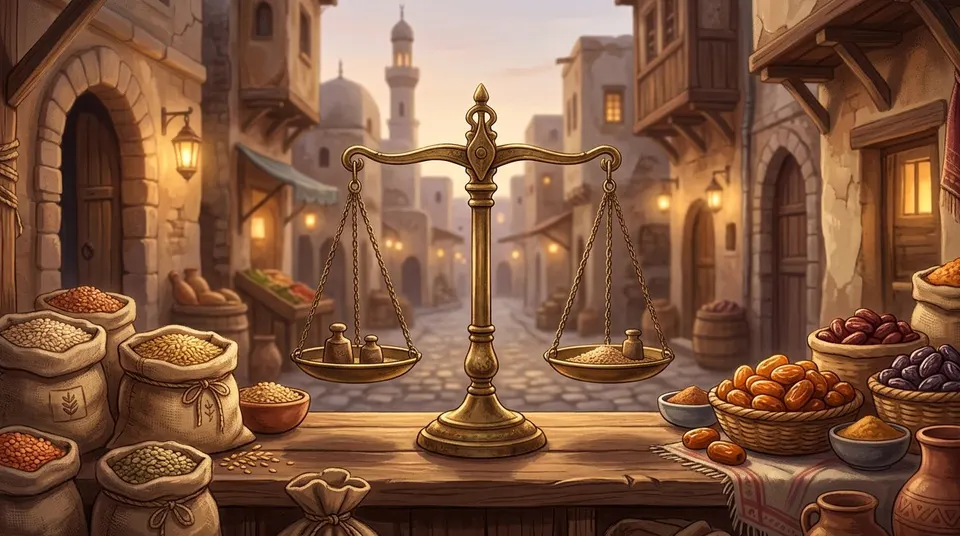
They worshipped others besides Allah, and they cheated in trade. They gave short measure and weight, took people's rights, and sat on the roads to threaten travellers and turn people away from Allah's path.
Shu'ayb told them, "O my people, worship Allah. You have no god other than Him. Give full measure and weight in justice, and do not deprive people of their things, and do not spread corruption on the earth after it has been set right. What remains with Allah is better for you, if you are believers."
They mocked him: "O Shu'ayb, does your prayer command you that we should leave what our fathers worshipped, or stop doing what we like with our own wealth? You are the forbearing, the sensible one!" He answered, "I do not want to do the opposite of what I forbid you. I only want to set things right as much as I can. My success is only through Allah. On Him I rely, and to Him I turn."
He reminded them of what happened to the people of Nuh, Hud, Salih and Lut, and told them, "Ask forgiveness of your Lord and turn back to Him. My Lord is Merciful and Loving." The arrogant chiefs threatened, "We will drive you and those who believe with you out of our town, unless you return to our religion."
Shu'ayb said, "We would be inventing a lie against Allah if we returned to your religion after Allah saved us from it. Our Lord, judge between us and our people in truth." Then the punishment came. A shadow of cloud came over them, and the earthquake and the blast seized them, and they lay lifeless in their homes. Allah saved Shu'ayb and the believers by His mercy.
Shu'ayb turned away from them, saying, "O my people, I conveyed to you the messages of my Lord and advised you. How can I grieve for a people who disbelieve?"
Honesty in money and in work is part of faith.
"I only intend reform as much as I am able. And my success is only through Allah."
Hud 11:88Read more in the Qur'an: Hud 11:84-95 · Al-A'raf 7:85-93 · Ash-Shu'ara 26:176-191
↑ Choose another prophet

14Musa
The one Allah spoke to
Pharaoh ruled Egypt as a tyrant. He divided its people into groups, oppressing the Children of Isra'il, killing their sons and keeping their women alive. Allah willed to favour the oppressed and make them leaders.
When Musa was born, Allah inspired his mother, "Nurse him, and when you fear for him, cast him into the river, and do not fear or grieve. We will return him to you and make him one of the messengers." She placed him in a chest on the river. Pharaoh's family picked him up. Pharaoh's wife, Asiyah, said, "A comfort for my eye and for you. Do not kill him." Musa refused every nurse, until his sister, who had followed the chest, said, "Shall I direct you to a household who will care for him?" So Allah returned him to his mother, so she would be comforted and know that Allah's promise is true.
When Musa grew up, he found an Egyptian fighting a man from his own people, and struck him, and the man died. Musa did not intend to kill him. He prayed, "My Lord, I have wronged myself, so forgive me," and Allah forgave him. When he learned the chiefs planned to kill him, he fled to Madyan. There he helped two young women water their flock, then sat in the shade and prayed, "My Lord, I am in need of whatever good You send down to me." One of them came back walking shyly: their father invited him. Musa married one of the daughters and worked for him for ten years.
On his way back with his family, Musa saw a fire on the side of Mount Tur. "Perhaps I can bring you a torch, or find guidance there." When he came to it, he was called: "O Musa, I am your Lord. Remove your sandals. You are in the sacred valley of Tuwa. I have chosen you, so listen to what is revealed." Allah gave him signs: his staff became a moving snake, and his hand came out shining white. "Go to Pharaoh. He has transgressed." Musa asked, "My Lord, expand my chest for me, ease my task, untie the knot from my tongue so they understand my speech, and appoint a helper for me from my family: Harun, my brother." Allah granted his request.
Musa and Harun told Pharaoh, "We are messengers of your Lord, so send the Children of Isra'il with us." Pharaoh reminded Musa that he had been raised in his house, and argued, "Who is your Lord?" Musa said, "Our Lord is the One who gave everything its form, then guided it." Pharaoh called it magic and gathered all his magicians on a festival day. They threw their ropes and staffs, and by their magic they seemed to be moving. Musa felt fear within himself, but Allah said, "Do not fear. You will be superior. Throw what is in your right hand." His staff swallowed up what they had made. The magicians fell down in prostration: "We believe in the Lord of Harun and Musa." Pharaoh threatened to cut off their hands and feet and crucify them, and they said, "Decree whatever you will. You can only decree for this worldly life."
Allah sent Pharaoh's people signs: years of drought and shortage of fruit, then the flood, locusts, lice, frogs and blood. Each time, they begged Musa to pray for its removal, and each time they broke their promise. Then Allah told Musa to leave by night with the Children of Isra'il.
Pharaoh pursued them with his army at sunrise. When the two groups saw each other, Musa's companions said, "We will surely be overtaken!" Musa said, "No! My Lord is with me. He will guide me." Allah revealed to him, "Strike the sea with your staff." It split, and each part was like a great mountain. The Children of Isra'il crossed on a dry path. When Pharaoh and his army followed, the sea closed over them. As he drowned, Pharaoh said, "I believe there is no god except the One the Children of Isra'il believe in," but it was too late. Allah preserved his body as a sign for those who came after.
Afterwards, Allah called Musa to Mount Tur for forty nights and gave him the Tawrah on tablets. While he was away, some of his people began to worship a golden calf made by a man called as-Samiri, despite Harun's warnings. Musa returned in anger and grief, and those who had worshipped it were called to repent. Musa also travelled to learn from al-Khidr, a servant of Allah given special knowledge, and learned that Allah's wisdom is behind things we do not understand. Allah spoke to Musa directly, and he is one of the five greatest messengers.
When you feel trapped, remember the sea. Allah opens ways you never imagined.
"My Lord, expand for me my chest, and make easy for me my task."
Taha 20:25-26Read more in the Qur'an: Taha 20 · Al-Qasas 28 · Ash-Shu'ara 26:10-68
↑ Choose another prophet

15Harun
The brother and helper of Musa
Harun was the older brother of Musa. When Allah sent Musa to Pharaoh, Musa asked, "My brother Harun is more eloquent than me in speech, so send him with me as a helper to confirm me. I fear they will deny me." Allah said, "We will strengthen your arm through your brother," and made Harun a prophet too.
Together they went to Pharaoh, and Allah told them both, "Speak to him with gentle speech, so perhaps he may remember or fear." Harun stood with Musa through the confrontation with Pharaoh, the contest with the magicians and the escape across the sea.
When Musa went to Mount Tur for forty nights, he left Harun in charge of the people: "Take my place among my people, do right, and do not follow the way of the corrupters."
While Musa was away, as-Samiri made a golden calf from the people's jewellery, and it made a lowing sound. Many began to worship it. Harun warned them, "O my people, you are only being tested by it. Your Lord is the Most Merciful, so follow me and obey my order." They said, "We will keep worshipping it until Musa returns to us."
When Musa returned and saw what had happened, he grabbed his brother by his beard and head in anger. Harun said, "O son of my mother, do not seize me by my beard or my head. I feared you would say, You have caused division among the Children of Isra'il, and did not wait for my word. The people overpowered me and nearly killed me." Musa prayed, "My Lord, forgive me and my brother, and admit us into Your mercy. You are the most merciful of the merciful."
Allah sends peace upon them both: "Peace be upon Musa and Harun." The Prophet ﷺ told 'Ali, "Are you not pleased to be to me what Harun was to Musa?" (Sahih al-Bukhari 3706).
Supporting someone else's good work is a beautiful kind of good work.
"And appoint for me a helper from my family, Harun, my brother. Increase my strength through him."
Taha 20:29-31Read more in the Qur'an: Taha 20:29-36 · Taha 20:90-94 · Maryam 19:53
↑ Choose another prophet

16Dhul-Kifl
Among the patient and the best
Dhul-Kifl is named twice in the Qur'an. Allah says: "And Isma'il and Idris and Dhul-Kifl, all were of the patient. We admitted them into Our mercy. They were among the righteous."
And again: "Remember Isma'il, al-Yasa' and Dhul-Kifl, all were among the best."
The Qur'an does not tell his story, and there is no authentic hadith that describes his life. Scholars have differed over who he was, and whether he was a prophet or a righteous man. Many held that he was a prophet, since he is mentioned among them. Allah knows best.
What we know is enough: Allah praised him for his patience and counted him among the best of people.
Some of the best people are known to Allah more than to anyone else.
"And Isma'il and Idris and Dhul-Kifl, all were of the patient."
Al-Anbiya 21:85Read more in the Qur'an: Al-Anbiya 21:85-86 · Sad 38:48
↑ Choose another prophet

17Dawud
The king who was given the Zabur
Dawud was a young soldier in the army of Talut, the king Allah appointed over the Children of Isra'il. On the way to battle, Talut tested his soldiers with a river: whoever drank from it, except a scoop from the hand, would not go with him. Most of them drank, and only a few remained.
Facing the huge army of Jalut, some said, "We have no power today against Jalut and his soldiers." But those who knew they would meet Allah said, "How many a small group has overcome a large group by Allah's permission. Allah is with the patient." They prayed, "Our Lord, pour patience upon us, plant our feet firmly, and give us victory." By Allah's permission they defeated the enemy, and Dawud killed Jalut.
Allah gave Dawud kingship, wisdom and knowledge. He gave him the Zabur, the Psalms. Dawud had a beautiful voice, and the mountains and the birds glorified Allah along with him morning and evening. Allah softened iron for him and taught him to make coats of chain-mail armour, measured precisely, to protect people in battle.
Allah tested his judgement. Two men climbed over the wall of his private prayer room, startling him. One said, "My brother has ninety-nine ewes and I have one, and he insists on taking mine." Dawud ruled quickly that the brother had wronged him, then realised he was being tested. He asked his Lord's forgiveness, fell down bowing and turned to Allah, and Allah forgave him. Allah said, "O Dawud, We have made you a khalifah on the earth, so judge between people in truth, and do not follow desire."
The Prophet ﷺ said that Dawud only ate from the work of his own hands (Sahih al-Bukhari 2073), and that the most beloved prayer to Allah is the prayer of Dawud, who slept half the night, stood in prayer for a third and slept a sixth, and the most beloved fasting is his: fasting one day and not the next (Sahih al-Bukhari 3420).
Power and worship can go together. The greatest king was also one of the most devoted worshippers.
"Work, family of Dawud, in gratitude. And few of My servants are grateful."
Saba 34:13Read more in the Qur'an: Al-Baqarah 2:251 · Saba 34:10-11 · Sad 38:17-26
↑ Choose another prophet

18Sulayman
The prophet who understood the birds
Sulayman inherited prophethood and kingship from his father Dawud. Even as a young man, Allah gave him understanding. When a flock of sheep strayed at night into someone's crops, Dawud and Sulayman both judged the case, and Allah made Sulayman understand the better judgement, while both were given wisdom and knowledge.
Sulayman prayed, "My Lord, forgive me, and grant me a kingdom such as will not belong to anyone after me." Allah answered him. He made the wind obey him, travelling a month's journey in a morning and a month's journey in an evening. The jinn worked for him, building palaces, statues, great basins and cooking pots. He was taught the speech of the birds and given from everything.
Once, Sulayman's army of jinn, men and birds marched until they came to a valley of ants. An ant said, "O ants, enter your homes so that Sulayman and his soldiers do not crush you without knowing." Sulayman smiled, amused at her words, and said, "My Lord, enable me to be grateful for Your favour on me and my parents, and to do righteous deeds that please You."
He inspected the birds and found the hoopoe missing. When it came, it said, "I have learned something you have not. I have come from Saba with certain news. I found a woman ruling them. She has been given of everything, and she has a great throne. I found her and her people prostrating to the sun instead of Allah." Sulayman said, "We will see whether you have told the truth," and sent it with a letter.
The queen told her chiefs, "A noble letter has been delivered to me. It is from Sulayman, and it is: In the name of Allah, the Most Gracious, the Most Merciful. Do not be arrogant towards me, but come to me in submission." She sent a gift to test him. Sulayman rejected it: "What Allah has given me is better than what He has given you."
Before she arrived, Sulayman asked, "Which of you will bring me her throne before they come to me in submission?" A powerful jinn said he could bring it before Sulayman stood from his place. But one who had knowledge from the Book said, "I will bring it to you before your glance returns to you." When Sulayman saw it placed before him, he said, "This is from the favour of my Lord, to test me whether I will be grateful or ungrateful."
They disguised her throne to test her. When she came, she said, "It is as if it were it." Then she was told to enter the palace. When she saw its floor, she thought it was deep water and uncovered her shins. Sulayman said, "It is a palace made smooth with glass." She said, "My Lord, I have wronged myself, and I submit with Sulayman to Allah, Lord of the worlds."
Sulayman died while standing, leaning on his staff, and the jinn did not know he had died. They kept working, until a creature of the earth gnawed through his staff and he fell. Then the jinn realised that if they had known the unseen, they would not have stayed in humiliating labour.
Every blessing is a test of gratitude.
"This is from the favour of my Lord, to test me whether I will be grateful or ungrateful."
An-Naml 27:40Read more in the Qur'an: An-Naml 27:15-44 · Saba 34:12-14 · Sad 38:30-40
↑ Choose another prophet

19Ilyas
Sent to the worshippers of Ba'l
Ilyas was sent to a people who worshipped an idol called Ba'l.
He said to them, "Will you not fear Allah? Do you call upon Ba'l and abandon the best of creators, Allah, your Lord and the Lord of your forefathers?"
They denied him, and Allah says they will be brought for punishment, except the sincere servants of Allah.
Allah left a good mention of Ilyas among later generations, and sends peace upon him: "Peace be upon Ilyasin. That is how We reward those who do good. He was one of Our believing servants." He is also named among the righteous prophets in Surah al-An'am. The Qur'an tells us no more of his story than this.
Don't swap the Creator for anything He created.
"Peace be upon Ilyasin. Indeed, We reward the doers of good."
As-Saffat 37:130-131Read more in the Qur'an: As-Saffat 37:123-132 · Al-An'am 6:85
↑ Choose another prophet

Al-Yasa' is mentioned twice in the Qur'an. In Surah al-An'am, Allah names him among the prophets He guided and chose: "And Isma'il, al-Yasa', Yunus and Lut, all of them We preferred over the worlds."
In Surah Sad: "And remember Isma'il, al-Yasa' and Dhul-Kifl, all were among the best."
The Qur'an and authentic hadith do not tell his story. What we learn is that Allah chose him, guided him, preferred him over the people of his time and counted him among the best.
Allah's praise is the only praise that really counts.
"And Isma'il and al-Yasa' and Yunus and Lut, and all of them We preferred over the worlds."
Al-An'am 6:86Read more in the Qur'an: Al-An'am 6:86 · Sad 38:48
↑ Choose another prophet

21Yunus
The companion of the whale
Yunus, also called Dhun-Nun, "the man of the whale", was sent to the people of Nineveh, a city of a hundred thousand or more. He called them to worship Allah, but they rejected him.
Yunus left them in anger, thinking that Allah would not hold him to account for leaving, before Allah had permitted him to go. He went down to the shore and boarded a laden ship.
At sea, the ship was in danger, and they drew lots to decide who would be thrown overboard. The lot fell on Yunus. He was cast into the sea, and a great fish swallowed him, while he was blameworthy.
In the darkness of the night, the darkness of the sea and the darkness of the fish's belly, Yunus called out: "La ilaha illa anta, subhanaka, inni kuntu minaz-zalimin": There is no god except You. Glory be to You. Indeed, I have been of the wrongdoers.
Allah says, "Had he not been of those who glorify Allah, he would have remained in its belly until the Day they are resurrected." So Allah answered him and saved him from his distress, "and that is how We save the believers."
The fish cast him onto a bare shore, and he was ill. Allah caused a gourd vine to grow over him to give him shade. Then Allah sent him back to his people.
His people had believed when they saw the punishment approaching, and Allah lifted the disgraceful punishment from them and let them enjoy life for a time. They are the only people in the Qur'an who believed all together at the sight of the punishment and were spared.
The Prophet ﷺ said, "The dua of Dhun-Nun when he called on Allah in the belly of the whale: no Muslim ever makes it for anything except that Allah answers him" (Jami' at-Tirmidhi 3505). He also said, "No one should say that I am better than Yunus ibn Matta" (Sahih al-Bukhari 3416).
You are never too far, or too deep in the dark, to call on Allah.
"There is no god except You. Glory be to You. Indeed, I have been of the wrongdoers."
Al-Anbiya 21:87Read more in the Qur'an: Al-Anbiya 21:87-88 · As-Saffat 37:139-148 · Yunus 10:98
↑ Choose another prophet
22Zakariyya
The one who prayed quietly
Zakariyya was a prophet of the Children of Isra'il and the guardian of Maryam. Maryam's mother had dedicated her to Allah before she was born, and Allah accepted her with a good acceptance. Lots were cast to decide who would care for her, and Allah placed her in Zakariyya's care.
Whenever Zakariyya entered her prayer chamber, he found provision with her. "O Maryam, where does this come from?" "It is from Allah. Allah provides for whom He wills without measure."
Seeing this, Zakariyya, an old man whose wife was barren, called to his Lord in a quiet, private prayer: "My Lord, my bones have weakened, and my head has filled with white hair, and I have never been disappointed in calling on You. I fear what my relatives will do after me, and my wife is barren. So give me from Yourself an heir who will inherit from me and from the family of Ya'qub, and make him pleasing."
While he stood praying in the chamber, the angels called to him: "Allah gives you good news of Yahya, confirming a word from Allah, a leader, chaste, and a prophet from among the righteous." Zakariyya said, "My Lord, how will I have a boy when I have reached old age and my wife is barren?" The answer came: "Thus Allah does what He wills. It is easy for Me."
Zakariyya asked for a sign. "Your sign is that you will not speak to people for three nights, though you are well, except by gestures." So he came out to his people and signalled to them to glorify Allah morning and evening.
Allah praised Zakariyya and his family: "They used to hasten to good deeds, and call on Us in hope and fear, and they were humble before Us." His dua is recited by many who long for children: "My Lord, do not leave me alone, and You are the best of inheritors."
Make dua, however unlikely it seems. Allah answers in His way and His time.
"My Lord, do not leave me alone, and You are the best of inheritors."
Al-Anbiya 21:89Read more in the Qur'an: Maryam 19:2-11 · Al 'Imran 3:37-41
↑ Choose another prophet

23Yahya
Given wisdom as a child
Yahya was the son of Zakariyya, born to him in old age as an answer to his dua. Allah gave him a name no one had been given before.
Allah told him, "O Yahya, take the Scripture with strength," and gave him wisdom while he was still a child. Allah also gave him tenderness from Himself and purity, and he was fearful of Allah.
He was dutiful to his parents, and he was not arrogant or disobedient. Allah describes him as a leader, chaste, and a prophet from among the righteous, confirming a word from Allah, meaning 'Isa, his cousin.
The Prophet ﷺ met Yahya and 'Isa together in the second heaven on the Night Journey (Sahih al-Bukhari 3207).
Allah sends peace upon him at three moments of his existence: "Peace be upon him the day he was born, the day he dies, and the day he is raised alive."
Gentleness and kindness to your parents are signs of real wisdom.
"And peace be upon him the day he was born, the day he dies, and the day he is raised alive."
Maryam 19:15Read more in the Qur'an: Maryam 19:7-15 · Al 'Imran 3:39
↑ Choose another prophet

24'Isa
Jesus, the son of Maryam
Maryam's mother, the wife of 'Imran, prayed while pregnant, "My Lord, I have dedicated what is in my womb to You." When she gave birth to a girl, she named her Maryam and sought Allah's protection for her and her children from Shaytan. Maryam grew up in worship in the care of Zakariyya. The angels told her, "O Maryam, Allah has chosen you and purified you, and chosen you above the women of the worlds."
One day, when she had withdrawn from her family to a place towards the east, Allah sent to her His angel, Jibril, in the form of a man. She said, "I seek refuge in the Most Merciful from you, if you fear Allah." He said, "I am only a messenger from your Lord, to give you a pure boy." She said, "How can I have a boy when no man has touched me, and I have not been unchaste?" He said, "Thus your Lord says: It is easy for Me, and We will make him a sign for people and a mercy from Us."
She conceived him and withdrew to a distant place. The pains of labour drove her to the trunk of a palm tree, and she said, "I wish I had died before this and was forgotten." Then a voice called from below her: "Do not grieve. Your Lord has placed a stream beneath you. Shake the trunk of the palm tree towards you, and it will drop fresh, ripe dates on you. So eat and drink and be content. If you see any person, say, I have vowed a fast to the Most Merciful, so I will not speak today."
She brought the baby to her people, and they said, "O Maryam, you have done something terrible. O sister of Harun, your father was not a bad man, and your mother was not unchaste." She pointed to the baby. They said, "How can we speak to a child in the cradle?" 'Isa spoke: "I am the servant of Allah. He has given me the Scripture and made me a prophet. He has made me blessed wherever I am, and commanded me to pray and give zakah as long as I live, and to be dutiful to my mother. Peace be upon me the day I was born, the day I die, and the day I am raised alive."
Allah gave 'Isa the Injil, and supported him with the Holy Spirit, Jibril. By Allah's permission, he made the shape of a bird from clay and breathed into it, and it became a bird. He healed those born blind and with leprosy, and brought the dead back to life, by Allah's permission. He told people what they ate and what they stored in their houses. His disciples asked for a table spread with food to come down from heaven, and Allah sent it as a sign.
Most of his people rejected him, and they plotted to kill him. Allah says, "They did not kill him, nor did they crucify him, but it was made to appear so to them... Rather, Allah raised him to Himself." The Prophet ﷺ said that 'Isa will descend again before the Day of Judgement as a just ruler (Sahih al-Bukhari 3448).
'Isa never claimed to be divine. On the Day of Judgement, Allah will ask him, "Did you tell people to take you and your mother as gods besides Allah?" He will say, "Glory be to You. It was not for me to say what I had no right to. I only told them what You commanded me: Worship Allah, my Lord and your Lord." He also gave the good news of a messenger to come after him, whose name is Ahmad.
Every miracle points back to Allah. The greatest honour is to be His servant.
"Indeed, I am the servant of Allah. He has given me the Scripture and made me a prophet."
Maryam 19:30Read more in the Qur'an: Maryam 19:16-36 · Al 'Imran 3:45-55 · An-Nisa 4:157-158
↑ Choose another prophet

25Muhammad ﷺ
The final messenger
Muhammad ibn 'Abdullah ﷺ is the last of the prophets and messengers, sent to all of humanity and to the jinn, as a mercy to the worlds. He was born in Makkah in the Year of the Elephant, a descendant of Isma'il, the son of Ibrahim, and so the answer to the dua Ibrahim and Isma'il made as they built the Ka'bah.
He lost his father before he was born, his mother when he was six, and his grandfather when he was eight, and was raised by his uncle Abu Talib. Even before prophethood, he was known in Makkah as al-Amin, the trustworthy. At the age of forty, in the Cave of Hira, Jibril brought him the first words of the Qur'an: "Read, in the name of your Lord who created."
For thirteen years in Makkah he called people to worship Allah alone, and he and his companions were mocked, boycotted and persecuted. He was taken by night from Makkah to Jerusalem and up through the heavens, where he met the prophets before him and was given the five daily prayers. Then he migrated to Madinah, where he built a community of faith, brotherhood and justice. Within ten years, Makkah opened to Islam, and he forgave those who had fought him.
The Qur'an was revealed to him over twenty-three years. His wife 'A'ishah said, "His character was the Qur'an" (Sahih Muslim 746). He passed away in Madinah at the age of sixty-three.
His full life is told, moment by moment, in our companion booklet, The Seerah, free at remindheart.com.
Love him, follow his way, and send salawat on him often.
"And We have not sent you except as a mercy to the worlds."
Al-Anbiya 21:107Read more in the Qur'an: Al-Ahzab 33:40 · Al-Qalam 68:4 · Al-Anbiya 21:107
Read the Seerah
↑ Choose another prophet
Get the free booklet
All 25 stories as a little booklet, to read on your phone or print for your family.